


How to Charge a Hyundai EV
Thinking about switching to an electric vehicle but wondering how charging fits into your routine? Charging a Hyundai EV can happen at home, while you’re at work, or at public charging stations while traveling.
For many drivers, the biggest adjustment isn’t how they drive. It’s simply replacing trips to the gas station with plugging in.
Here’s what you should know about Hyundai EV charging before making the switch.
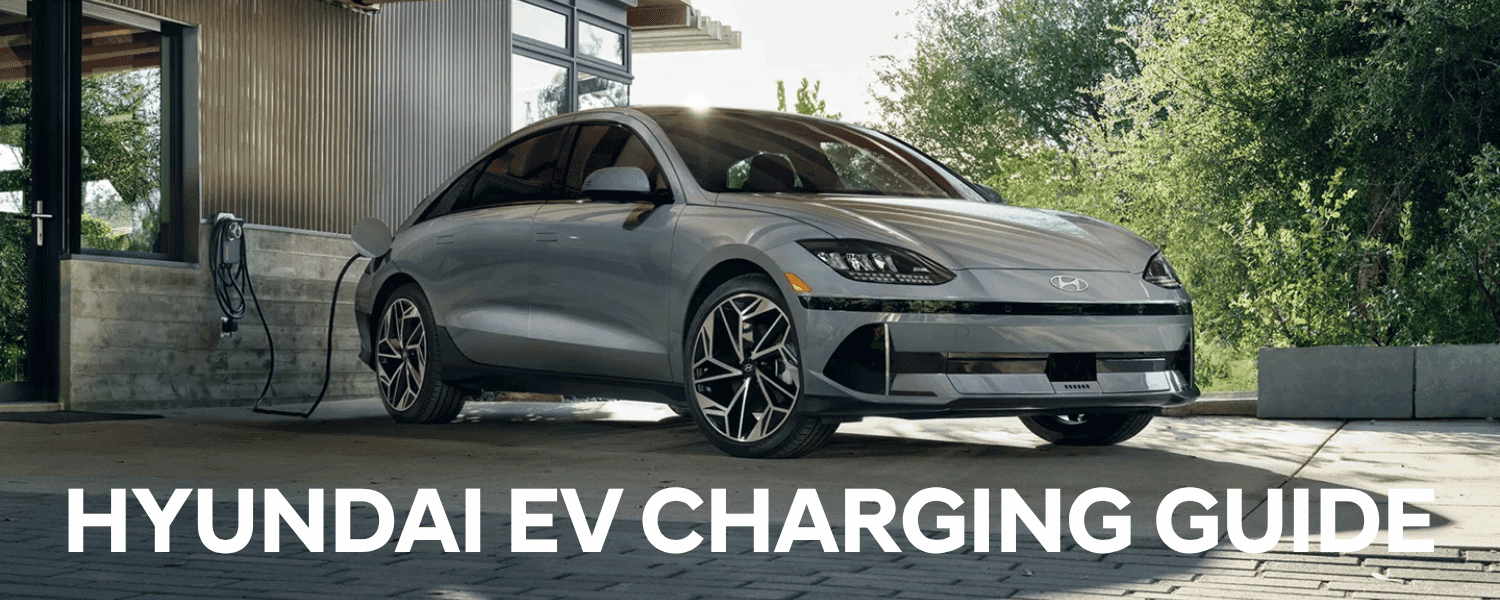
Where Can You Charge a Hyundai Electric Vehicle?
Hyundai EV drivers generally have two main choices: charging at home or using public charging stations.
Home charging is convenient for everyday driving because the vehicle can recharge while it would otherwise be parked. Public charging provides additional flexibility for longer drives and for drivers who don’t have access to charging at home.
Your ideal charging routine may include a combination of both.
Charging Your Hyundai EV at Home
For many EV owners, home becomes their primary charging station.
There are two main types of home charging to understand.
Level 1 charging uses a standard 120-volt household electrical outlet with compatible equipment. It is convenient but relatively slow.
Level 2 charging uses a higher-powered 240-volt connection and can charge an EV considerably faster.
If you regularly drive to work, school, appointments, and errands during the day, Level 2 charging can allow you to plug in when you get home and recharge overnight.
Do You Need a Level 2 Charger at Home?
Not every EV driver needs the same charging setup.
Level 1 may provide enough charging for someone who drives relatively few miles each day. Drivers with longer commutes or more frequent travel may find Level 2 charging considerably more convenient.
Before installing a home Level 2 charger, a qualified electrician can help determine whether your home’s electrical system can support the equipment and what installation may require.
How Does Public EV Charging Work?
Public EV charging stations operate similarly to other self-service payment networks.
Depending on the charging provider, you may use an app, account, membership, or another payment method to begin a charging session.
Before plugging in, check:
- Connector compatibility
- Charger speed
- Station availability
- Current pricing
- Your vehicle’s battery level
Public stations may offer Level 2 charging or much faster DC charging.
What Is DC Fast Charging?
DC fast charging is the quickest way to recharge a compatible Hyundai EV and is particularly useful when traveling.
Instead of waiting several hours for an overnight charge, a compatible fast charger can add a substantial amount of energy during a shorter stop.
Select Hyundai IONIQ models use an 800-volt electrical architecture capable of taking advantage of high-powered DC charging.
The exact amount of time you’ll spend charging depends on your Hyundai, the station, battery temperature, state of charge, and environmental conditions.
Why Is 10% to 80% Charging Important?
When researching electric vehicles, you’ll often see manufacturers advertise the amount of time required to charge from 10% to 80%.
That’s because EV batteries generally don’t charge at their maximum rate all the way to 100%. Charging can slow as the battery approaches a higher state of charge.
On a road trip, this means it can sometimes be more time-efficient to charge enough to reach your next destination or charging stop rather than waiting for the battery to reach 100%.
What Is NACS Charging?
NACS stands for North American Charging Standard.
Hyundai is transitioning newer electric vehicles in North America to NACS, which expands the number of charging locations Hyundai EV drivers may be able to access, including compatible Tesla Supercharger locations.
Connector compatibility varies by Hyundai model and model year. Some vehicles have native NACS ports, while certain earlier Hyundai EVs may require an approved adapter to use compatible NACS charging stations.
Always verify compatibility before connecting your vehicle to a charger.
How Fast Do Hyundai IONIQ Models Charge?
Hyundai’s IONIQ lineup was designed with rapid charging in mind.
Charging performance varies between models and configurations, but compatible high-powered DC chargers can take certain Hyundai IONIQ batteries from approximately 10% to 80% in well under 30 minutes under ideal conditions.
For example, Hyundai lists charging times around the 20-minute range for compatible IONIQ 5 configurations using appropriate high-powered DC equipment, while the larger IONIQ 9 can complete a 10% to 80% charge in approximately 24 minutes on a compatible 350-kW charger.
Actual charging performance will vary.
What Can Affect Hyundai EV Charging Speed?
Several factors determine how quickly your battery charges, including:
- Battery temperature
- Outside temperature
- Starting battery percentage
- Charging-station output
- Vehicle charging capability
- Battery size
- Charging-network conditions
A charger advertised at a certain maximum output does not mean your vehicle will receive that amount of power throughout the entire charging session.
Home Charging vs. Public Fast Charging
Which charging option should you use?
Home Level 2 charging is generally best for routine charging because your vehicle can recharge while you’re home.
Public Level 2 charging can be useful while working, shopping, staying at a hotel, or spending several hours at a destination.
DC fast charging is best suited for road trips and situations where you need to add range quickly.
Most EV drivers don’t need to rely on only one type of charging.
Hyundai EV Charging Questions
How often will I need to charge my Hyundai EV?
It depends on your daily mileage, vehicle range, and driving habits. Someone with a short commute may charge less frequently than someone who drives significant distances every day.
Can I leave my Hyundai EV plugged in overnight?
Home charging is designed to make overnight charging possible with compatible equipment. Follow the charging and battery recommendations provided for your specific Hyundai model.
Does cold weather affect EV charging?
Yes. Low temperatures can affect battery performance and charging speed. Other conditions, including high temperatures and battery temperature at the start of a charging session, can also influence charging.
Can a Hyundai EV use a Tesla charger?
Compatible Hyundai EVs can access certain Tesla Supercharger locations. Whether your vehicle can connect directly or requires an adapter depends on its model, model year, charging port, and the charging station.
Is home charging cheaper than public charging?
It can be, but the answer depends on your local residential electricity rates and the rates charged by public charging networks. Public fast-charging prices can also vary by provider and location.
How do I know which charger my Hyundai needs?
Check your vehicle’s charging port and owner’s information before using a public charger. Connector type and compatibility can vary by Hyundai model and model year.
Start Exploring Hyundai EVs
Understanding EV charging can make the transition from gasoline to electric driving much easier. With home charging for everyday use and public fast charging for longer trips, Hyundai EV drivers have several options for keeping their vehicles powered.
Ready to learn more about electric driving?
Learn About the Hyundai IONIQ 5